 Episode 9
· 53:01
SHAY: Are you ready for another episode of How to Humanist? Because I sure am. It's Shay Leonia, your ridiculous host for this episode. And it's a new week. Happy new week everyone. Happy new episode.
Well, some of you — as far as death conversations go, this one I would say is probably one of the funnier ones that you could enjoy. I didn't want to go through and add a whole bunch of little trigger markings because then you might end up bracing yourself for something that doesn't necessarily hit so hard. But just know that if you are a little sensitive, feeling squishy and vulnerable at the moment, feel free to skip this episode.
What I will say is that there will be talks of ice cream. There will be talks of a very famous actor. There will be many talks of many things, because that's how things are when I get together with DS Moss, who is just a wonderful person. I've had the pleasure of working with him a couple of different times now, and having him on the podcast was just the cherry on top. So I look forward to continuing to work with him.
Without further ado, I want to get into this week's review. Jay G. Glendon, thank you so much. Jay G. Glendon says, "Thank you. This feels right, thoughtful without being pedantic." You all love to use the big school words in your reviews, and you know what? I kind of like it. I'm almost tempted to tell you for every review to try to find some word that's gonna stump me. Please. Fortunately, I know pedantic. "I found myself stopping the show to digest what I was hearing and figure out how the ideas fit into my life. Looking forward to more." You know, Jay Glendon, today's episode is probably going to be the biggest opportunity for you to do that.
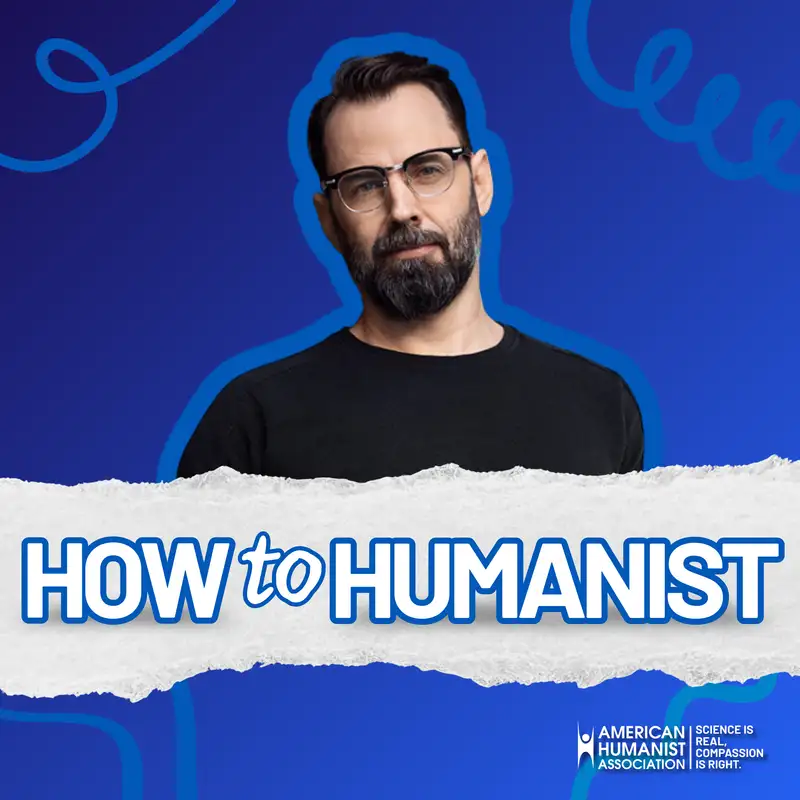
In case you would like to be acquainted, DS Moss is a humanist chaplain and Webby, Signal, and James Beard award-winning storyteller, unwavering in his pursuit to relate stories that connect us to our humanity. A natural explorer, he uses playful inquisition to examine the complexity of the human condition and the intrinsic meaning of life. Moss maintains an interdisciplinary practice of storytelling, street philosophy, and practical altruism. In 2015, Moss created the Adventures of Memento Mori podcast, the consequence of this deep meditation o... dot dot dot, to be continued. You can also learn more by just going to his website, dsmoss.com. I feel like he ran out of characters in the bio submission.
What was really cool about when I was listening back to this episode was that in one part we end up talking about the stories that our elders wish to leave and how to tastefully get them. And I had totally forgotten that we had discussed this, because when I was in Los Angeles I got to stay with one of my older cousins. She is beautifully 82 going on 83, and she was at Berkeley during the feminist uprising and Vietnam — like she was at the place to be. And so I was just getting all of these super incredible mind-blowing stories every night that I was with her, and I was not recording them like a putz.
So then finally, my last day, I go and I hit record and I put my phone face down. If she's hearing this, she's gonna kill me. But anyway, I have my phone face down because I've gotta get these stories recorded from her. And so we're catching up and talking for maybe about 10 to 15 minutes before all of a sudden she notices. She notices the freaking pop socket on the back of my phone. For any of you that don't know what a pop socket is, it's like a little nudgey circular thing, like a button that pops open and makes it easier to hold your phone — it's very ergonomic. Anyway, you can just look one up. She noticed the pop socket and was like, oh, what's that? And so suddenly I'm like tossing my phone aside, like chucking it across the room like, what? What? Because I didn't want her to see that I was recording. Ugh, ugh. The one night that I just wanted to get her fascinating stories on record.
So anyway, I shall try again in the future, because that was a major fail. But this episode is not. Oh, you like that segue? That was nice.
------------------------------------------------------------------------
SHAY: I'm very curious how you went from being a Marine to suddenly being the guy that can talk about all things death.
DS: That's a lot of points in between. I've been thinking about this very topic a lot — the idea of moments and milestones, and perhaps sometimes even objects that are on your path, no matter how zigzaggy that path may be. Almost like these artifacts of your own personal scavenger hunt that all lead to who you are now. And who you are now is not the destination, ever.
I've just been reflecting on what are those things — those people, inspirations, things that sort of make you go, wow, and then change the course of where you're going. And so I have many of those.
From Marine to where I am today, in short order hopefully, is that really it starts with Harvey Keitel.
SHAY: Um, yes. That is — he said Harvey —
[SHAY interjects: That is the most unpredictable and ridiculous sentence I've ever heard. It's truth, as we will come to hear, but I almost — it's like one of those things that you immediately want to get a shirt that says that. He really had us going for a second that this was going to be all emo. Nope. Harvey Keitel. So for some of us it's Harvey Keitel.]
DS: And so, as most stories go, it's so random. So I was in Second Battalion, Eighth Marines, which is stationed in North Carolina. Our entire unit was on vacation because we were just about to be deployed, and for whatever reason I stayed back. I was in intelligence, which was called S2. And so the offices of S2 and S3, which was operations, were joined. There's like this big squad bay of just coworking spaces. The only two people in this huge space were the S3 officer and me.
And so one day I hear him in his office on the phone saying, "No, nobody is here to have lunch with Mr. Keitel."
And I made that exact face, and I went and knocked on his door, admitted that I was eavesdropping, and was like, uh, sir, I'll have lunch with Harvey Keitel.
So Harvey Keitel was also in the same unit that I was in, just back in like 1958. And he was in North Carolina making a movie called Shadrach, and was like, whilst I'm in town, I'll ring a ding ding my old unit and see if any of those Marines want to have lunch. So I had lunch at the chow hall with Harvey Keitel and his entourage. And then he was like, come out to the set tomorrow. So I went out to the set and hung out in his movie trailer.
And then I realized that I had sort of these inklings of wanting to be in the creative world, even in film. But I come from Idaho, and you're either a mechanic, a plumber, another type of mechanic, or a farmer. So it was just never something that entered the reality of my world.
And so when I was on set for that first time, I was just surprised about how much it operated like the military and how unromantic it was, which made it more romantic for me. Because it wasn't where leprechauns and unicorns lived. It was just real people with walkie talkies. And so that was the first artifact that was like, oh. And then he gave me his business card. He's like, if you're ever in New York, give me a call. And then that was the thing that made me decide to go to film school.
And the thing about that too is that I had created the story — it's a good story — and I created it like this was meant to be. And I almost over time let this idea, this dream, begin to calcify. And I say that because it's how I got to death world.
So I was on that path, went to film school at University of Texas, then moved to New York, pursued that, and it was always this grind, grind, grind. It was never enough really to make a respectable life — fun, but there was no 401k or stability or any of that. And then I started my own business in New York doing these ethnographic videos for brands. I was fortunate enough to have clients like Nike and Jordan, but the production cycle was short. It was really just me, so I didn't have great business development. When I was on a job, I was on a job and didn't have time to create the next job. So it was this very start and stop flow of getting work.
Anyway, all of that is to say that one December I was in the middle of a job for Nike and they pulled out. It was a big tent pole job and it just sort of collapsed everything for the holiday season and into the spring. And it was kind of my moment of like, I just can't do this anymore.
I had through that work met this sound designer who did the audio mix for these videos, and I was like, dude, let's just do a passion project. That was the podcast, and it was born out of this existential curiosity, this searching for the meaning of life through the lens of it being finite.
------------------------------------------------------------------------
[SHAY interjects: Don't worry, I've got you. He's talking about his podcast, the Adventures of Memento Mori. It is a seeker's guide for learning to live by remembering to die. It's a podcast that explores the cosmos of death and how it shapes life — part existential scavenger hunt, part philosophical chin wag. We don't say chinwag enough. This is nice to see again. And part spiritual quest. This offbeat and heartfelt show follows the host DS Moss as he attempts to reconcile his own impermanence in order to become a better human while there's still time. So what you're gonna do is you're gonna pause this episode, you're gonna make sure that you search the Adventures of Memento Mori, and you're gonna queue up the first episode from his first season to play right after you're done with this one. Sound good? I think so.]
------------------------------------------------------------------------
DS: And what's so kind of — I look back and get a kick out of it — I only thought we would get like 10 episodes out of it. I was like, how many conversations can you have about death anyway? And then that's kind of how it was born.
SHAY: So you as a kid in Idaho — are you growing up humanist, or did you grow up religious? Like, how did you arrive at humanism now?
DS: We grew up Assemblies of God. I was raised in a private Christian school. I was homeschooled until the fourth grade.
SHAY: Really?
DS: Yeah. Rapture drills. The rapture's popular now, but it was also very popular in the eighties.
------------------------------------------------------------------------
[SHAY interjects: Step on up. It's our time to shine, my fellow cerebral jukebox trigger people. I don't know what the name for us is. Is there an official name? Let me know. Are you of the vote for Anita Baker, or Blondie — that's "Rapture" by the way — or is there a different song that I'm not thinking of? Let me know and I will be sure to reveal where I'm at right now. Especially when I go to fold my clothes, I'll be able to really sink my teeth into what song is stuck in my head. I'll post on our Instagram stories once I finish my laundry, so make sure you're following us at American Humanist on Instagram to find out which song was stuck in my head when he mentioned that.]
------------------------------------------------------------------------
DS: Yeah, anyway. That was in Idaho, in Hailey, Idaho. And then my parents split and we stopped going to church altogether.
Yeah, I kind of didn't think about it for a while. But I always have this ping of spirituality or curiosity or meaning — that thing that just kind of always left me a bit unsettled or wanting to find the answer to what's bigger. And then that kind of led me to the podcast. And in the first season of the podcast, I became a pretty hardcore skeptic. Borderline nihilist, until I realized that's not a great place to be. Because sometimes you look at the void too long. You look at death too long, and it does have an effect of like, nothing means anything. And I don't believe that's true, and that's also not a great place to stay for too long.
Again, we're talking about this existential scavenger hunt with artifacts along the way. It was happenstance how I found humanism. I was doing an interview with a Buddhist — which is well documented — and she was like, you should be a chaplain. And I was like, I don't believe in God. Can't do that. But it was seeded.
And then the very next interview I did was in this mini series about religious beliefs in the afterlife, and it was with an imam at NYU. He was also a chaplain. I wasn't interviewing him because he was a chaplain. And then there was some construction going on in his office and he was like, if you don't mind, we'll use a colleague's office. And the colleague's office was the humanist chaplain's office.
And I was like, what's humanism? What's a humanist chaplain? And he was like, oh, it's a chaplain that doesn't believe in God. And I was like, get outta town. So it was Anne's office. And then I just cold called Anne and I was like, tell me about this chaplain that doesn't believe in God. And I talked to Anne, and then in short order I cold emailed Greg Epstein. And then he responded and then I just kind of had this awakening. I'm like, oh, I'm a humanist, and I've been a humanist this whole time.
SHAY: Wow. I didn't realize that it happened so late for you. Because, I mean, clearly that's the whole reason behind this podcast — because it happened so late for me. But I never got that impression from you. Not that I would, but you just seem to know your shit, Devin. I
DS: Don't — you're in trouble now. When did you come on to it?
SHAY: I discovered it from the job opening at the AHA when they were looking for, at the time, a comms director, which thank goodness I didn't get that job because Court is an incredible director. And then the job opened up for comms manager and I was like, oh, okay. So by then I had had maybe like a month and a half to have that light bulb moment where I was like, oh my gosh, I am a humanist.
DS: And well, good for you.
SHAY: Thank you. That's — I think what's fascinating about that and maybe the commonality between our stories, I think there are millions of people that are humanists and don't know it.
DS: Yeah, exactly. I'm still trying to move past Harvey. It's just so funny, and I'm not trying — okay.
SHAY: I used to work at a coffee shop during college because I actually went to the American Musical and Dramatic Academy in New York. While I was there I was working at a coffee shop, and we would constantly get — like Mandy Patinkin would come in with Kathryn Grody, and Joan Allen was one of my regulars, and Elias Koteas came in. And he would always get his white chocolate mocha. And one time I said to him, I'm so — I said, I loved you in Ninja Turtles. And he just — you know, he was like, thanks, and then he just went and got his drink.
But you know, it's the same thing for me. I instantly feel compelled to be like, I was just watching Sister Act and Harvey Keitel is so good.
DS: That's right. Oh gosh. It's so generational. It's embarrassing. Harvey Keitel, I know that you've been in other things that are incredible. Oh my gosh.
DS: It's funny because he had quite a bit of — I don't know if it's a renaissance, but he had a surge during that time. So this must have been around '96. Pulp Fiction had just come out. Bad Lieutenant had just come out. So he was on a bit of a run. Sister Act I guess had by then been a couple years in the can.
SHAY: I forgot about — you know what's funny about Sister Act is that when I was in high school, one of my many jobs was I worked at Suncoast Home Video where we would sell —
DS: Oh my gosh.
SHAY: We would sell the VHS tapes.
DS: Oh, I miss video stores.
SHAY: Aren't they the best?
DS: Yeah.
SHAY: Especially ones with like secret rooms.
DS: Yeah.
SHAY: Depending on what the secret room is. Yes.
DS: That's what I was thinking.
SHAY: No, that's not what I was thinking.
DS: No, that's — oh man. Yeah. Oh, look at us just taking a trip down nostalgia lane.
SHAY: I know. So that I guess brings me to my first question. The first episode that I did on this podcast was telling a story about my mom. And so I think listeners who have heard that episode are understanding — I lost my mom early. She got sick when I was around nine years old. She started exhibiting symptoms, but it's so wild to people because I always say how jealous I am of people that have family members with cancer diagnoses, because at least they're still them.
This was at the time called Pick's Disease. It's now known as FTD, which is what Bruce Willis has. And it makes the person deteriorate in their frontal lobe, which makes you revert back to a toddler — you become a zombie. Especially the behavioral variant. So I had to witness my mom become a zombie as a kid, not understanding what that was about, and then not realizing that she was never coming back. Like she was only ever gonna get worse.
And so one of the questions that my team brought up — funny enough, they're also grappling with family members who have gone through either a stroke or something that has kept them technically alive in the shell of what they were, but they're already starting to have to grieve somebody who is still there, that you can still touch.
So I'm so curious, like what I could have told myself back then as a kid, or even told my family members, because they were much older and caretaking for her. It was tough.
DS: That's a hard situation for a child to go through, for people to go through — to grieve in the midst of someone still being there.
I mean, I don't know if there's much to tell your nine-year-old self. Really, it's just be with her. Love her. There's, as you pointed out, no solution, there's no fixing. I'm trying to say there's no fixing this and there's no fixing you then.
I wonder, how do you perceive looking back at that version of you that we can talk to? How did she interpret and handle this?
SHAY: Not well, because it was 1995 or '96 when she got diagnosed. It's one of the most leading misdiagnosed diseases out there. And of course she was diagnosed with depression first. So we were all gathered in a family therapy session that was kind of like an intervention where the therapists encouraged us to tell her we love her and just plead with her to snap out of it. Of course that didn't work.
So then by the time she ended up eventually getting to the nursing home, I had kind of come to terms with the fact that she wasn't going to come back. But I remember distancing myself — like I didn't want to see her that way, so I didn't go to visit her. And I don't blame myself necessarily for that.
And so I wonder, what can other people who are going through something similar gather behind the decision of whether or not to visit that person, considering that they're not them anymore?
DS: Yeah. These are such hard things to do a thought exercise with, because it is so different. But I would just say, try to be present in awareness of where that loved one is and where you are.
What's coming up for me in this conversation is that culturally — and painting with a broad stroke here — we have an over-indexing on having an exact articulate solution and having a fix to everything. And I would just say, don't try to do it right. Don't try to overthink it. Be with how you're feeling in that moment. So if that is wanting to distance yourself, understand that and be okay with that, because that form of denial is, obviously — and I know you know this — a survival mechanism. You were trying to stay alive in your nine-year-old self the best way you knew how.
And at every given point in our lives, we're just operating on the best that we know how to do in that situation. As we get older, just be as cautious and as self-aware as we can to make sure we're not operating on previous versions of those survival skills when we have other skills developed that are just maybe dormant or not activated. But like, that's the grapple. That's the, like — grief is grief and not grief. Meaning that we want to make it better and we want to fix it. And I know this is probably not a satisfying answer for a lot of people, but you just have to be in it. And if being in it is denial, then that is a way to survive. And it's not something that's bad behavior and it's not something that demonstrates you don't love the person. You're just trying to figure it out.
And I think the ultimate thing to do is just to name and recognize, and as best we can, understand with those others in our tight love circles where everybody is, and again, without having this overlay of like, here's the right way to do it. Here's how to fix it. Here's how to make everything better for your life for the next 20 years. Because that's just not really how it works, but that's just the world in which we live right now.
SHAY: I think the pressure around how we're grieving when the person is still here is immense. Not only are you getting people's opinions around you, even if they are in your close circle, you might be hearing from your dad about, oh, you should be doing X, Y, Z, and how dare you not. And so getting tangled up in that, but also like the pressure that somebody — even an adult — puts on themselves. Okay, if I make this decision now for my self-preservation, will I regret it later?
DS: Yeah. This is the hardest — I can't think of anything more challenging than having to grieve while the person is still alive. So many traps and so many, like you said, so many outside pressures. It's the hardest.
SHAY: Have you, if you don't mind sharing, have you had to experience that yourself in your life?
DS: Not personally. Like I've had patients at the hospital with dementia, but not too many. So yeah, like I said, I haven't experienced it to the degree of you and some of the folks you're referencing. I can't imagine anything that could be harder.
SHAY: Well, you were featured in the New York Times article around being the chaplain for somebody who was on death row. Do you feel like there's any relation to that — like knowing that there was an impending D-Day?
DS: There are distinct differences between that and what you're describing. With someone that is actively dying, say in a hospital bed at the age of 94, it's a progression towards death. I think there is —
That is also hard, but what makes that story and his experience even harder is that there was hope until the very end. There was a possibility — although knowing the governor at the time and his record with these things, it was a long, long, long shot. But that's all you have in those situations is hope.
So for that person in that situation — and I can't speak for Phil, but being a witness to it, I can maybe summarize how I saw it — is that the closer we got, particularly that last week before the execution, because of the isolation cells they keep them in, and they keep the lights on 24 hours a day, and then this idea of there is a possibility of the governor granting a stay — it becomes a bit manic. And I don't see how anybody wouldn't, because of just the stakes and the pressure and the possibilities.
I don't think, speaking for his immediate family and even the attorneys and his friends, there's not grieving in real time because there's really two things. There's one, getting on the hope bus with them and protecting yourself in that way from the grief. And there's also the kind of grabbing them and being like, I know that on November 30th it's going to happen, and I need to make sure I'm being with you in the fullest life possible. I'll save that grief for later.
So I think those are the ways that it's different from what you're describing. Both are so hard. But I would even say that your situation, as far as grief is concerned, is far more challenging.
SHAY: Well, there feels like there's a bridge. I mean, I am absolutely in favor of programs like Death with Dignity. I wonder about the people that are having to make that tough decision upon getting a terminal diagnosis — they don't want to suffer and put their family through all of the hell, for lack of a better term, and they get to choose what day they're going to go. It feels so closely related. The difference though is that the people that get to choose their own Death with Dignity date, they get to surround themselves with family. They get to have like a big party and whatnot. I can't imagine what it was like for Phil to not be able to take advantage of those things while still knowing that the date was approaching.
DS: Yeah. Like I said, what the system does leading up to that is just another form of torture. It's missing so many opportunities for humanity. Because what you're describing is being with loved ones, making the decision, having agency — that's demonstrating some humanity.
And yeah, it always — that situation always makes me wonder, and I'm always left with the question of like, who are we and who do we want to be? And I think what gets so hypocritical is that most of the states that still have active executions are the most religious states.
The question of who are we or who do we want to be — I think it's disgraceful. Oh, go ahead.
SHAY: No, you go.
DS: No, I just wanted to slightly change subjects and maybe we can get back to Phil, but I just want to say it while I'm thinking about it — about death with dignity and medical aid in dying, even if it's just as a plug. I think that's why it's extremely important for families at any stage to have these conversations, and that everybody get an advanced directive so that their family knows what to do in these situations.
Advanced directive day is also like tax day. So ring a ding ding, here in a couple weeks. Do your advanced directive if you don't have it. Make sure your family knows what you want. So that, worst case scenario, a platform has been created that's gonna allow folks to have that agency. Because if you don't have that advanced directive, they will keep you alive as long as they possibly can.
SHAY: Such a great point. I will probably do my little interjection at this point and name drop the living will company that we use at the AHA.
------------------------------------------------------------------------
[SHAY interjects: How apropos — we actually use a company called FreeWill. If there's anything you can't say, we're not on brand.]
------------------------------------------------------------------------
SHAY: I wonder, like, once you hopped off the hope bus, what were you left with? Because I find that grief feels like such a theoretic, invisible thing. I never know — like when people ask me, especially therapists who always ask me, have you grieved the loss of your mom? I never know how to — I have no idea. What does grief actually look and feel like?
DS: The way I think about it, and I got this from a play that was turned into a movie called Rabbit Hole. The movie had Nicole Kidman and Sandra Oh in it, probably about 15 years ago.
SHAY: I love Sandra Oh. Love her.
DS: And it was about a mother grieving a child. Someone crossing the street, playing in front of the house, got hit by a car. The story is about the relationship between the mom and the man who hit the child with the car.
But it was the grandmother of the child, the mother of Nicole Kidman's character, who I think described it best. Grief is like a brick, and it's a brick that you have to carry, and each person you grieve is another brick, and the weight never leaves. So how you then live your life is where you distribute those bricks to lessen the weight. Because if you carry it here, it's going to strain you. But where you carry it and how you carry it is how you survive it.
Because I think that says two things. There will be more. And so it's not like, are you over this one before the next one? There will be more. And so it's how you carry it. It's how you cognize it. It's how you hold it in a way that doesn't destroy you. In a way that doesn't take you down with it. But also not treating it as an enemy and not treating it as something to get over or to fix. It's like letting it — it's part of you. And now how are you going to control the flow of it within your body?
Because I think out of all the emotions, grief is the most somatic. Grief is the one that gets stored in our stomachs and our shoulders and our organs. And that's real.
Yeah. I get a little bit angry when I think about people treating grief as though it's a cold.
SHAY: Yeah. You'll get over this. Oh my goodness. Because I've never been able to answer that question cleanly, because I know that for the rest of my life there are gonna be days where suddenly the brick reappears and I find myself unable to get out of bed, wishing that she was here and all that kind of stuff. But other days are easier. So to treat it like it's one solid process that you can go through in real time — I mean, not to say that therapists aren't an amazing resource to distribute those bricks around, but like. I've just never been able to give them a clean answer around that.
DS: Because that's the truth. There is no clean answer.
SHAY: Yeah.
DS: Yeah. There is no.
SHAY: Yeah.
DS: In many ways that's what ice cream is for.
SHAY: Yes, exactly.
DS: Yeah. What's your go-to flavor, by the way?
SHAY: I'm kind of a simple guy. I like a mint chocolate chip. I like a real nice vanilla bean. I do like cookie dough, but more in just a vanilla base. I wouldn't take you as a cookie dough guy.
DS: Toffee. I like a toffee and vanilla. The caramel swirls.
SHAY: Oh, we're getting exciting now.
DS: There's a — I'm totally forgetting the brand and we're off topic, but it's so good. It's an Indian family that makes Indian-flavored ice creams. It's in Brooklyn. I'm sure you probably know.
SHAY: Hold on one second. You wouldn't be talking about this brand, would you?
DS: Yes.
SHAY: Shut up. Are you serious? What are the chances?
DS: Oh, those are so good. Like every single one of them.
SHAY: So they have them in Philly too, where I'm at.
DS: Oh!
SHAY: So I had to stock up.
DS: Oh good, good. They're spreading their wings.
SHAY: They are. They are. And yeah, it's heavy duty stuff. I am lucky that they're not very close to me, because otherwise it would be a problem.
DS: Exactly.
SHAY: Yeah.
DS: It almost feels good for you.
SHAY: Mm-hmm. Yeah, because —
DS: Exactly. They're so good. There's like, this isn't decadent, this is just right.
SHAY: Me.
DS: So, okay, so then with the hope and the grief — I'm just trying to think, because this bricks analogy is so perfect. So thank you to that movie and the writers of that script. But I think, like, other religions seem to have that distribution channel of doing certain rituals, ancient rituals even. What do we do?
------------------------------------------------------------------------
ANNOUNCER: Preparing an end of life ceremony or memorial for a loved one can feel pretty overwhelming. It takes a lot to plan a meaningful celebration and coordinate with others in mourning while also navigating your own grief. But you don't have to do it without support. The Humanist Society can connect you with professional humanist celebrants who are ready to help you craft and host a ceremony that honors your loved one in a sincere way, true to their life and legacy.
If you want to explore what it means to work with a humanist celebrant and find one near you, visit thehumanistsociety.org. And if you're interested in supporting others with their ceremonies, we invite you to join our growing network of humanist celebrants across the country.
------------------------------------------------------------------------
DS: We have to develop rituals and we have to make them our own. And the key to this is that they have to be alive and they have to be real.
The practical use of these rituals, again, is indexing on this idea that grief is the most somatic emotion there is, and it's how we process it through us, into others, and reflect it back. Rituals are so powerful for many things, but especially for this. So as humanists we have to figure that out by ourselves, and it can't be just copying someone else isn't taking out the G word. We have to make it alive. And I think that's up to us as the celebrants and the chaplains to really figure that out.
I know there's some effort right now with the spiritual care handbook for studying chaplains around this topic as well. And I would say just for the general public or the humanists out there as well, it can be syncratic. So if something in the Buddhist tradition resonates with you and feels real and alive for you, do that. If there's something in whatever tradition and you can make it alive and it feels authentic in that moment, do that.
And I would recommend — grief is hard because you don't know until you're grieving. It's not a wedding that you can prep for. I think as humanists or as an association, there's a lot of opportunity for us to really develop what that looks like.
And I would also say to some of our more atheist-leaning humanist friends to maybe let go of that steering wheel a little bit too. There is, and I'm not saying there's any belief needed, but just the connective flow that rituals give us and the grounding that they give us to life, and especially the connection they give us to each other, are a part of the human experience. So don't throw out that baby with the bathwater.
SHAY: Are there any ones that you've seen that — even if they're just ones you personally enjoy — any ones that you recommend people consider?
DS: For grief or just generally?
SHAY: For like the rituals around memorials and things like that.
DS: Well, I would say a lot of the Jewish traditions have some really beautiful, thematic, and timely rituals, so I would start there. I'm very Zen adjacent, so I like my Buddhist rituals, which are sometimes more contemplative and meditative. But yeah, and I grew up Christian so I can also connect to those in a meaningful way as well.
SHAY: Yeah.
DS: But I guess I don't have like a favorite. The one that I do more frequently now than I have in a while is I have a lot of — I'm in the everybody's turning 50 range of life, and so I do a 50th birthday ritual with all my friends, which is kind of my favorite thing to do. Oh, crossing the threshold. The second life.
SHAY: Wow. And that's approaching for you?
DS: Oh, it's in the room. It's upon —
SHAY: It's upon. It
DS: has approached. It has landed.
SHAY: Ah, wow. Because I think my personal favorites are — and I grew up as a Reform Jew, so I think of candles, like light. And I also think of saying their name. For me I'm the big genealogist in my family and it's almost like every time I discover a record or something that adds another missing piece to a name, I feel like I'm giving them new life.
DS: I think that's important. I think that's very beautiful. Because what you're articulating there is that it's alive for you, and in some ways it keeps them alive for you and others.
SHAY: What I did when my grandfather passed — and he was the last of that generation, which I'd never thought about before until it happened, like now this generation in the family is gone — I created a big cloth. And our family crest is a rose, and so every person that from thereafter dies, their name just gets embroidered into this cloth. And then each member of the family holds the cloth for a certain amount of time and then gives it to another member of the family.
DS: Ah.
SHAY: Just as a way to — as you said, what resonates with you is seeing the name and saying the name, and having some type of artifact, be it a candle in its impermanence or a cloth. I think that's a beautiful way to remember.
DS: I love that. I have a question that's forming based around the fact that you were in film school. There's a lot of pressure for those like me who want to get those memories while they're still here. And so we're like putting a camera in our elders' faces and they're just like, what are you — I don't want to be filmed like I'm about to die tomorrow.
Have you found a good way to collect their stories without losing them? Because I find that they're always telling me their stories but then it goes in one ear and out the other and I'm like, damn, I should have written that down.
SHAY: I would say audio is the best method. I mean, it's all — I guess it depends on how ethically you want to handle it if you want to secretly record your grandparents.
But I think you're onto something too. When we get into our elder states, we do want to tell the story of our lives and we want to be heard. And so I think that's kind of the key — just make sure you're listening to them and not just indexing on preserving their stories and their memories, but actually just hearing what they're saying and asking questions.
I think as a culture we should do that more. Sit down with our elders and our folks that are getting to the cliff of that generation being gone. And yeah, artifact those stories. Like, I love doing that with most things and most people. So I have to be careful how far I push that boundary. But yeah, do it.
DS: Especially with those generations that are just like, ah, I don't want to talk about that, or we don't have to talk about that right now. I get that a lot. I have those family members that are just like, I'm not talking about that. And I'm like, ugh. Do you know how much work you're creating for me after you die? Like, I'm gonna have to do all this research to find out what you wouldn't tell me.
SHAY: Keep it up though. Because I think eventually they'll start to loosen up and be like, all right, now I want to relieve this from wherever it's living in my mind.
DS: Yeah.
SHAY: I am a good nudge in that way. I am a very good nudge.
DS: Good nudge.
SHAY: How does a humanist react when they've lost somebody, they're grieving, and they're getting religious people saying, don't worry, they're in a better place now? How do you hold up a kind boundary while recognizing that they're trying to say something kind to you, but it's not resonating for you?
DS: I don't think there's much to do other than be in where you are. And if that irritates you, then you're perfectly well within your rights to express how you're feeling with that.
I would say, speaking as a chaplain, I think we have to take into consideration the intent. I do think we should be leading with grace in those moments. It's not anybody's job to correct the person, because we know we're not going to, and ask ourselves, is now the time to be having that conversation about a person being tone deaf to a person in grief?
Because as a society we're just not around death enough to be taught how to behave around people that are grieving. We just don't know. And so a lot of folks, be it religious or otherwise, are sometimes very sincere in what they say, and they're just trying to say the right thing. Some people just have pocket things that they say because that's what their tradition says.
So I would maybe just back up and be like, that is what it is. Is that the opportune time for education? Most likely not. And so then the question is, when is the best opportunity for that education? And I think it's way beforehand.
And I think this maybe touches on the broader topic of just how unskilled and uneducated we are, culturally — and I'm not even gonna say Western culture, America specifically — around death and dying. And slightly tangential to that is how we treat our elders. It's always like, it's segregation, push away, push away. And death is the same thing — we're always pushing away.
So with that question, I think it's a symptom of a much bigger issue that culturally I think we need to figure out. Because ultimately how we treat death is how we treat life.
SHAY: Ooh. Can you elaborate on that?
DS: Well, we want to, again, this idea of pushing away. We want to clinicalize everything. We want to medicalize everything. We want to avoid everything. Having conversations with your family about death is probably one of the most challenging things that we do. And so what do we do when we don't want to have a challenging conversation? We just store it for another day. And that takes us out of presence.
And I think also too, culturally, we're just not deep-rooted in those traditions that take, for example, just our neighbors to the south — the Mexican culture has a much closer relationship with their family unit and death and dying, and that is not a coincidence.
And so how do we get rooted in a generational mentality that allows us to witness it when we're young? When I say witness it, I mean really being, living with your grandmother or your great-grandmother and then watching that process. I think when we're young it helps to form a very healthy relationship with mortality as we get older. But we live with a protect-your-eyes mentality — except for when it comes to TV and video games. It's such a weird contradiction.
SHAY: Right.
DS: We are very dysfunctional with our relationship with death. And it shows in those moments that matter the most.
SHAY: But it's also such a systemic thing that puts up blockades from us being able to do that successfully. Like my mom would've been able to stay home with us if we had been able to afford a home health aide, but we couldn't. And you know, in that instance, you're forced to put the person who is unsafe at home in a nursing home where they will get care. But in this country, we are just constantly having to work and work and work. And so even if we do want to be the kind of family that will let our elder die at home peacefully, surrounded by family and love, we can't.
DS: Yeah.
SHAY: And I hate that for us.
DS: I hate that for us too. I think these are systemic cultural issues that are gonna take a lot of work to change. But we gotta do it.
SHAY: We do. Because I'm so jealous of other countries and other cultures where I see these 90-something-year-olds just out gardening, saying hi to their friends, getting to live this full life. And I'm like, oh, why don't we have that here?
DS: Yeah.
SHAY: Let me see what other questions my team had here that we didn't touch on. How do you cope with the finality of death, both personally as a non-believer and when the people around you see it as a joyful passing on?
DS: I would say, good for them. Those that think they're gonna see family and loved ones in the passing on — who knows? I have a hunch, but let that be the instigation to determine how you live. Because I think that question almost — and this is not an insult to the question — but I don't think that question matters.
Treat life as though there is a finite horizon moment. And it's not like live every day as your last, but how does that determine who you are and how you want to be within community, world, in context with others? It's funny because the more I got into wrestling with that very question, the less important it became to me.
SHAY: Mm.
DS: So cope with that by living the best, or the most real, or the most alive version of you that you can. And I'm not saying go quit your jobs and hit the road. But maybe, I don't know. That's —
SHAY: Start a band.
DS: Start a band at 50. That's how you cope.
SHAY: Like, what is your view of death? And somebody on the team was talking about how they love quantum physics because of the idea of us remaining around as energy, and I would love to hear your take.
DS: I don't believe that to be true.
SHAY: Okay.
DS: I'll start by saying this. But in having done the podcast, the question that people most often ask me is, what do you think happens after we die? And what fascinates me about that question, although it makes complete sense, is that even when we think about our own mortality — even when we let it in, like, what will I be when I'm no longer in my body? — the first reaction is how to survive it in another way.
SHAY: Mm-hmm.
DS: It's what happens next.
SHAY: Yeah.
DS: And it kind of goes back to the coping question, is that most likely there is no next. Be it like energy — yes, but I think that's misrepresenting the science of quantum physics a little bit. I mean, yes, we will be energy and potentially could be regenerating other microbiomes or the earth if we allow our bodies to do that. But think of a candle and the flame. When you extinguish the flame of a candle, the flame doesn't permeate in existence somewhere else. The flame is extinguished. Yes, that energy may repurpose, but it will never be a flame again.
In the same way, Shay is Shay. This is it. Devin is Devin. This is it. Whatever may happen to our energy after we die, we are never gonna know. And so it's never gonna matter to us right here and right now. And so I would say stop thinking about what happens next, and think about what happens right now.
SHAY: Oh, I'm gonna cue up "This Is It" by Kenny Loggins after this and we'll be good to go.
Devin, thank you so much for this.
DS: Of course. Thank you.
SHAY: Absolutely. I love getting to talk to you. You're just awesome, and I'm so excited to continue supporting you in all your endeavors.
DS: Oh, thank you. Thank you. And thanks for sharing your story. Big hugs to you.
SHAY: Oh, thank you.
------------------------------------------------------------------------
ANNOUNCER: If you are listening to this podcast, you probably care about science, bodily autonomy, and treating people with empathy. You probably believe you can live a good, meaningful life without religion. The good news is you're not alone.
How to Humanist is a program of the American Humanist Association, a nonprofit that defends the separation of church and state, protects freedom of belief, and advocates for policies grounded in reason and human dignity. We show up in the courtroom to protect the separation of church and state. We advocate in workplaces and schools to defend our freedom of belief. We work on Capitol Hill to shape the kind of country our kids inherit, and we build a community of people who share your values. But it only happens with your support.
If this podcast resonates with you, take the next step. Go to americanhumanist.org/join to learn more about our work and to become a member. Whether it's $5 or $50, you'll help fund the legal fights, the advocacy, and the community that makes a more humanist world possible. Join us at americanhumanist.org/join.
Listen to How to Humanist using one of many popular podcasting apps or directories.